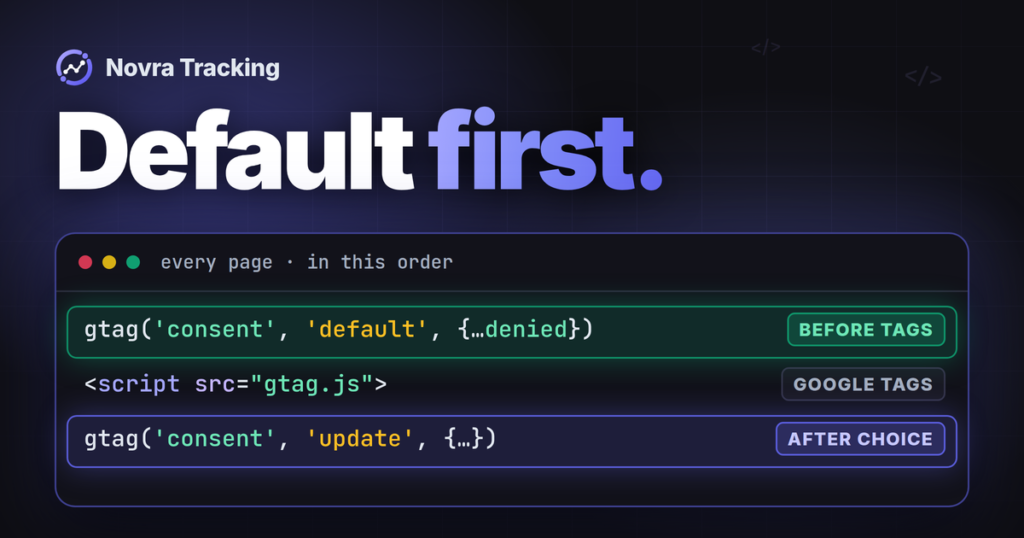
FluentCart server side tracking starts with the order event and the destination, not with renting a tracking server. Novra Tracking can report paid FluentCart orders directly from WordPress to supported platforms. Its GA4 fallback, Meta server purchase and Google Ads options solve different problems, so check each destination separately.
Novra Tracking’s FluentCart integration fits when you want these connections managed inside your shop, without code or a tagging server. A separate server-side Google Tag Manager setup is another architecture. Choose between them by the events and destinations you actually need.
Choose direct delivery or a server container
Browser tracking uses a script in the shopper’s browser. Server tracking means your website reports the sale itself. Neither term tells you where the original event came from or whether the platform processed it.
| Architecture | What it does | Good fit |
|---|---|---|
| Direct Novra integration | Paid FluentCart orders feed the platform connections you switched on. | You need Novra’s documented events and destinations without operating a separate tagging service. |
| Server-side Tag Manager | A server container receives events and routes them through configured tags. | You need custom routing and have someone responsible for event inputs, hosting, security and maintenance. |
| Browser-only setup | Browser events reach the selected destination when the page and consent conditions allow. | Your required destination or chosen setup has no server path. |
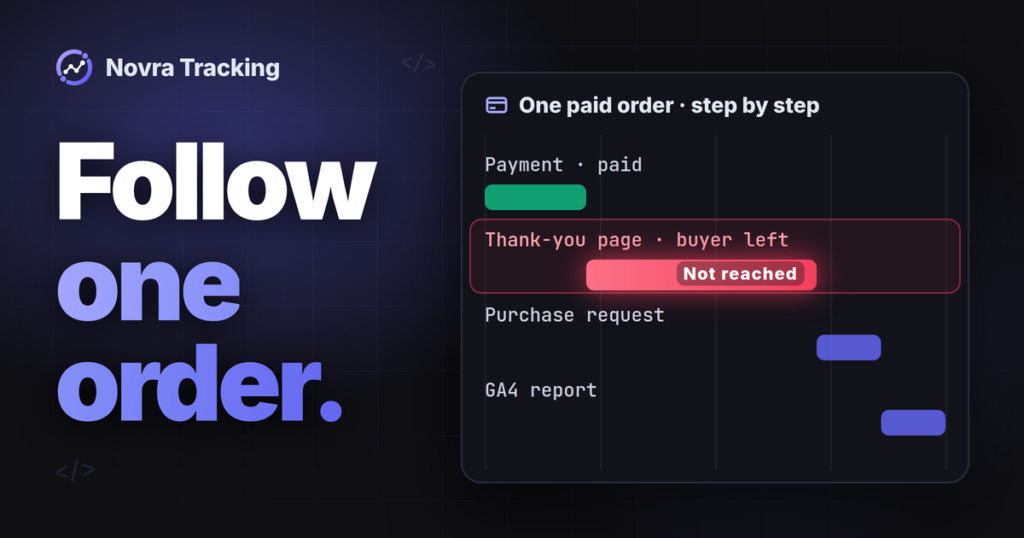
Google’s server-container introduction shows inputs from browsers and web servers. A container does not create a missing paid-order event. If its only input depends on a receipt page, closing that page can still remove the input.
Novra also pushes every event to the dataLayer, a browser-side event list that Tag Manager can read. This option is on by default. Having this list does not mean a server container is installed or that browser-independent order delivery exists.
Match the destination to its real route
| Destination | Documented Novra route | Boundary to check |
|---|---|---|
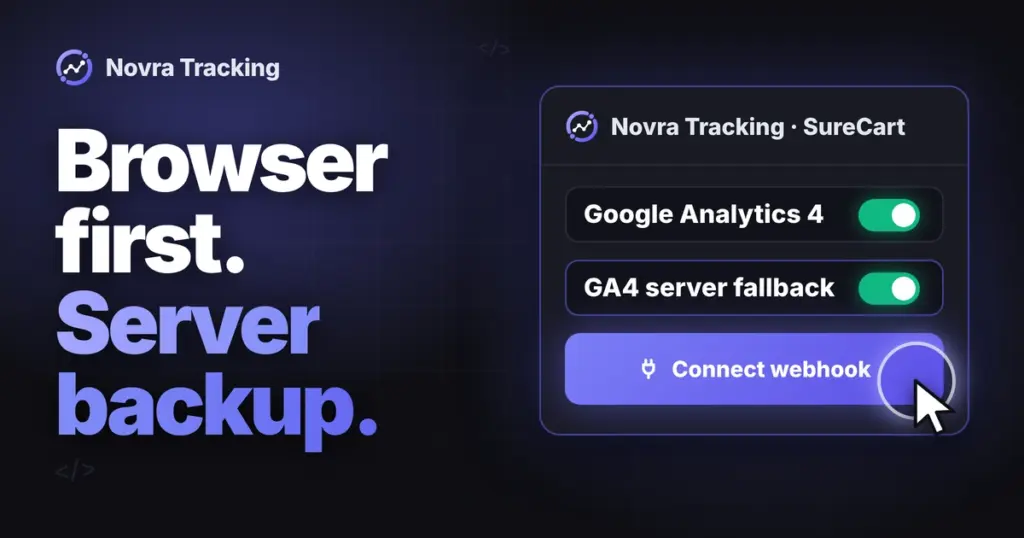
| Google Analytics 4 | Browser events plus a server purchase 30 minutes after payment when the browser did not confirm its hit. Refunds and renewals also go from the server. | The server route needs an API secret from the same web stream and recorded statistics consent. It is not an immediate second copy of every purchase. |
| Meta | Browser Pixel plus an optional server Purchase through the Conversions API, a few minutes after payment. | Use the intended Pixel, an access token and recorded marketing consent. Only orders paid within 47 hours of being placed qualify. |
| Google Ads | Browser purchase conversions, recovery on the visitor’s next page view and a refund correction feed. An optional server upload exists and is off by default. | Recovery needs a later page view. The server upload has so far been tested against a simulated Google server only, not against Google Ads itself. |
Each destination has its own setup guide on our blog: FluentCart GA4 setup with the server fallback, FluentCart Google Ads conversion tracking and FluentCart Meta Pixel with the Conversions API. This page helps you decide which of these routes you need first.
A GA4-based Google Ads conversion is another distinct route. It shares an Analytics event with Ads and is not the same as Novra’s optional Google Ads server upload. Enhanced Conversions improves matching and is not a synonym for server delivery.
Check FluentCart order and checkout behavior
Novra Tracking 1.0.0 needs WordPress 6.4+, PHP 8.0+ and FluentCart 1.6+. Confirm your installed versions, platform access, consent banner and working WordPress background jobs before choosing a route.
Its FluentCart integration covers product pages, lists, cart, checkout, the checkout modal, instant checkout links and the receipt page. Unpaid orders, such as an open bank transfer, are reported once they are paid. This makes a direct order-based route possible without relying on the receipt page alone, subject to each destination’s rules.
Use FluentCart’s payment-status definitions. Paid, pending, partially paid and authorized are not interchangeable. A shipment status or receipt view alone does not establish captured payment.
- Receipt purchases: Novra’s FluentCart browser path requires a paid order that is not a renewal.
- Delayed payment: a later paid order can feed eligible server routes. It does not override destination consent or time limits.
- Renewals: FluentCart subscription renewals have a separate path. Do not assume every destination counts them as new purchases.
- Refunds: GA4 receives refund events, Google Ads gets a correction feed, and Meta has no refund event. One platform’s correction is not universal.
Use four scenarios to choose
These are hypothetical decisions, not Novra test results.
- The customer pays, then closes the redirect page. An eligible GA4 fallback or Meta server purchase reduces dependence on the receipt page. Google Ads recovery still needs a later page view by that visitor.
- A bank transfer is paid days later. Do not promise universal recovery. Novra sends the Meta server copy only for orders paid within 47 hours of being placed. Review each required destination separately.
- The customer refuses marketing consent. A server connection is not permission to send the order to Meta. Novra uses the consent recorded at checkout, and analytics consent is a separate choice.
- You need custom events or unsupported destinations. Compare a maintained custom integration or server container. Confirm an actual event source, not just a new forwarding service.
Novra’s direct approach suits you when its documented routes match your needs. It is not a substitute for a custom event model, a consent decision or operated tagging infrastructure.
Decide what each destination should receive
Before entering credentials, write down one row for each destination. This keeps browser events, order events and reporting expectations from getting mixed up.
- The action: first paid purchase, refund or renewal.
- The source: browser checkout action or paid FluentCart order.
- The sender and the receiving account or data source.
- The required consent and the recorded checkout choice.
- The identifier, currency, item fields and value definition.
- The expected delay, time limits and the evidence you need.
For Google, Novra’s FluentCart integration uses the invoice number when present, otherwise the internal order ID. For Meta purchases, the shared event ID uses order_ plus the internal order ID. Do not assume these different fields are interchangeable.
Check tax, shipping and discounts explicitly. Google’s item-based GA4 purchase value differs from the full amount the customer paid. Confirm Novra’s value settings before you compare revenue.
For Meta’s browser and server pairing, corresponding events must reach the same Pixel with matching names and IDs within 48 hours. Novra’s 47-hour payment limit is a separate safeguard. Neither prevents double counting caused by a second, unrelated plugin.
Verify each layer before relying on reports
Run purchase checks in an isolated test shop with separate measurement destinations, outside live campaigns. If you cannot arrange that, postpone purchase tests. Do not switch off consent to make an event appear.
| Layer | Evidence needed | Insufficient substitute |
|---|---|---|
| Shop | The intended order is paid and has the required recorded consent. | A receipt-page visit. |
| Transport | The intended request reached its endpoint. | A credential saved successfully. |
| Validation | The documented diagnostic checks find no structural problem. | Assuming validation proves account access or reporting. |
| Destination | The correct source received the expected event and handled both copies. | A local dashboard marked sent. |
| Reports and attribution | The intended purchase and value appear; any credited ad interaction is checked separately. | One successful request or a shop total matching by coincidence. |
Google’s Measurement Protocol reference says an HTTP success does not prove correct or processed data. Its validation server does not validate API secrets and does not add events to reports.
Novra’s test purchase is not a FluentCart checkout test. In debug mode, Novra sends server-side Google hits to that validation server. Meta’s test-event documentation also says coded test events are not dropped and can affect targeting and measurement. A test code alone is not isolation.
Test the normal paid-order path and the missing-browser path separately. Include each checkout and payment method you depend on. Keep identifiers and field comparisons in a clean record, without credentials or customer details.
Choose the smallest supported setup
Start with one needed destination and a verified order definition. Add another server route only when you can state its benefit, requirements and acceptance checks. Server-side does not automatically mean anonymous, consent-free or complete.
If the documented routes fit your FluentCart shop, see Novra Tracking’s FluentCart features and plans before you build separate tracking infrastructure. It is a one-time payment, and you can try it on your own shop with a 30-day money-back guarantee.